
Sex Offender Checks in Real County
The Texas Public Sex Offender Registry is the main official search for Real County. Texas DPS maintains the portal, while the Real County registration authority receives and verifies information under state law. Within a municipality, the proper local law-enforcement authority handles registration. Outside an incorporated city, the Real County authority does. Official sources do not publish a Camp Wood or Leakey police registration office, so the Real County Sheriff is the practical contact for the correct appointment or location.
Searchers can use a name or geographic fields. A geographic Real County registry search is especially helpful because many homes lie outside city limits. Results can change as an address, status, or verification entry is reported. They should be checked again when a current safety decision depends on them.
The official Texas registry search form shows the statewide public entry point.
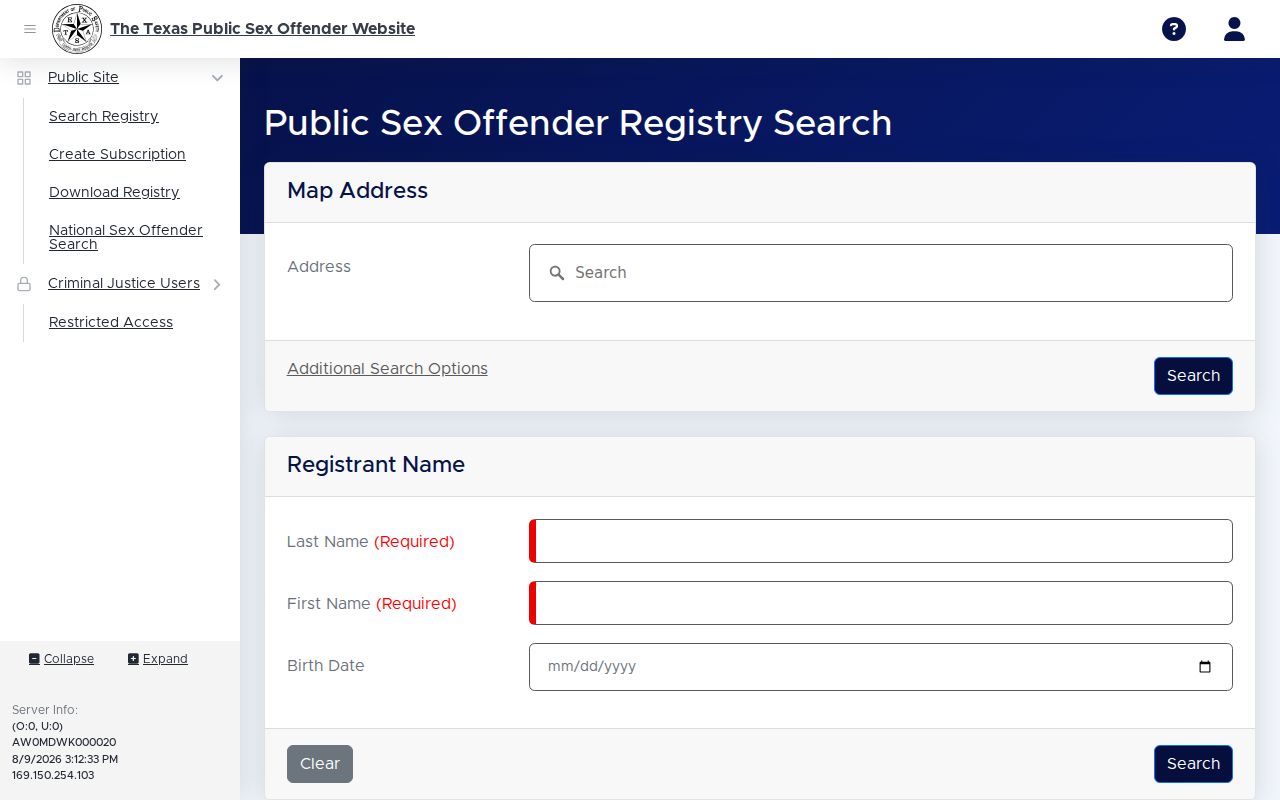
Choosing Real County keeps rural registrations in scope even when no city name is a good match.
Real County Registry County Filter
Real County spans 699.16 land square miles and had only 3.9 residents per square mile in the Census research. Camp Wood and Leakey are its only incorporated cities. Those facts change search strategy. A city-only query can omit people registered at rural addresses or location descriptions outside either municipality.
Start broad with County set to Real. Then use a name, Real County address, ZIP code, or map and list controls to narrow the pool. If a result seems close, open the entire Real County profile. Compare aliases, physical description, registration status, offense information, and location fields. A common name or nearby point alone is not enough to identify a person.
The Texas registry landing page places the search within the state's official registration system.
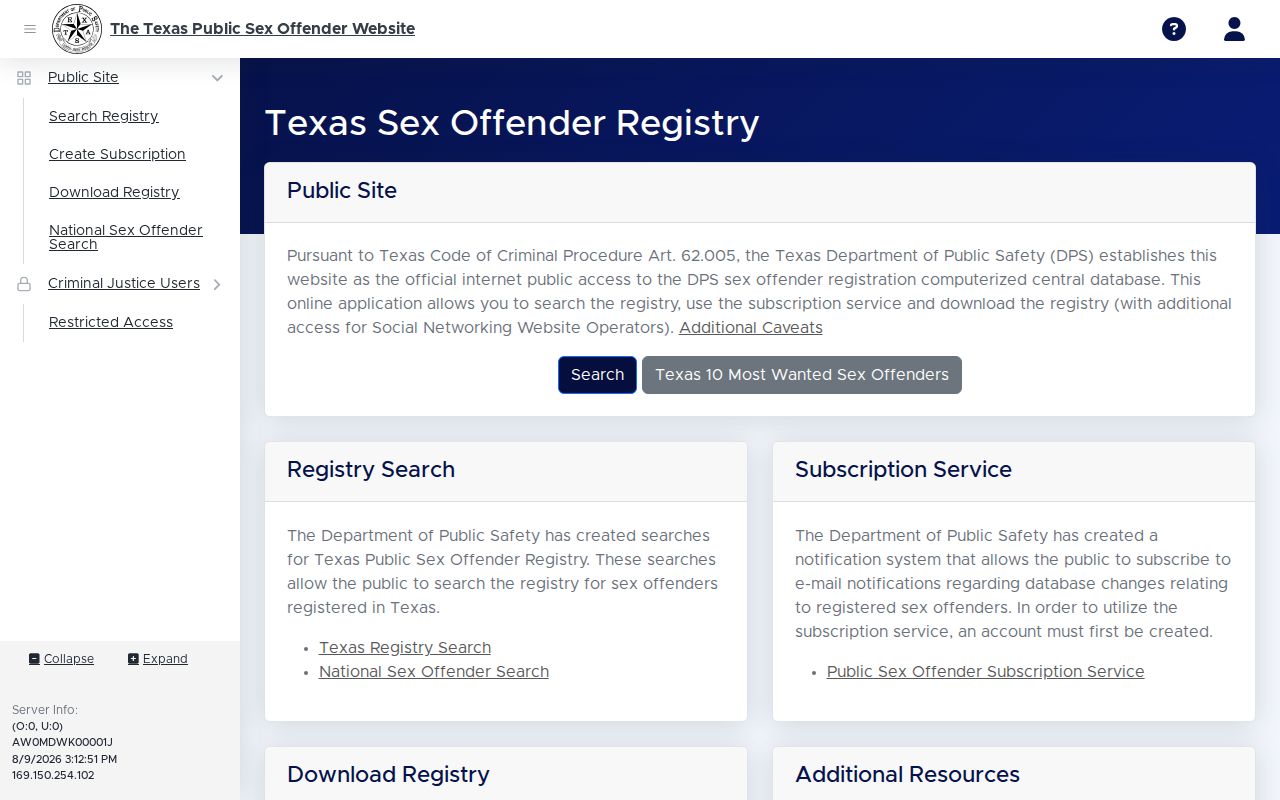
That statewide context matters because the Real County sheriff does not publish a separate Real County offender list or map.
How to Search the Texas Public Sex Offender Registry
Use the official portal without a fee or account. Begin with the channel that fits the Real County question. A name route looks for a known person. A Real County address, city, county, or ZIP route supports area awareness. Exact live radius options were not stable in the research capture, so do not assume a specific mileage choice.
- Open the Texas DPS registry search and review its conditions and disclaimer before submitting a query.
- For the broad local view, choose Real in the County control. Add a name, address, city, or ZIP only when it helps answer the question.
- Review map or list results, then compare full identifying details. Do not treat a pin or similar name as a confirmed match.
- Open the complete public profile and note its status, registering agency, address or location description, offense data, risk level, and verification dates.
| Field Label | Type | Required | Notes |
|---|---|---|---|
| Last, First, Middle Name | Text | Name route | Middle name is optional; compare aliases in the profile. |
| Address | Text | No | Used for a geographic or proximity-based search. |
| City | Text or list | No | May miss unincorporated Real County addresses. |
| County | Dropdown | No | Choose Real for the countywide view. |
| ZIP Code | Text | No | Another geographic search path. |
| Map or List View | Control | No | Changes display where available. |
| Search or Clear | Button | Action | No account or charge is required. |
Real County and National Registry Searches
A Real County registry search is the best Texas-centered view for local addresses, risk labels, registration status, and state profile fields. The National Sex Offender Public Website adds a federal search layer across participating jurisdictions. It is useful when a person's home, work, or school ties cross a state line or when a search area reaches beyond Texas.
The NSOPW search page documents that multi-jurisdiction option.
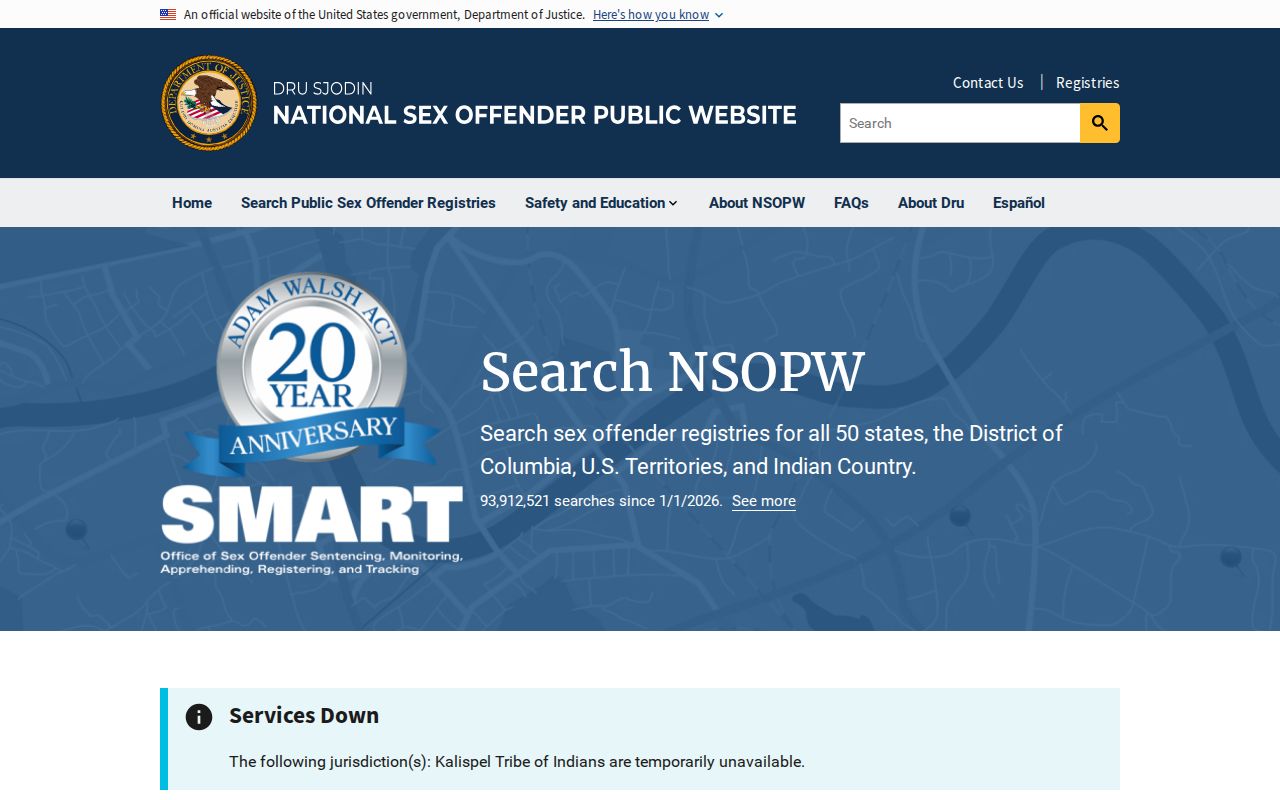
NSOPW adds reach, but the Texas DPS profile remains the key source for Texas-specific status, law, and local registration details.
No-result screens require care on either system. Records can lag, a query can be too narrow, and a person may use an alias or a location description rather than the expected street address. A registry check is one part of safety planning, not a guarantee that risk is absent.
Inside a Registry Profile
A public Texas profile can combine identity, Real County location, registration, and offense fields. It may also show vehicles and public school or occupational data where authorized. Read the Real County profile as a whole. Risk level has a distinct meaning, and a registration end date or lifetime status comes from the reportable offense rules rather than the label alone.
| Identity | Registered name, aliases, SID or DPS identifier, sex, race, date of birth or age, and physical descriptors. |
|---|---|
| Photo and marks | Public image plus scars, marks, or tattoos where displayed. |
| Location | Registered address or location description with county, city, and ZIP. |
| Registration | Status, registering agency, start and end or lifetime status, and verification dates. |
| Offense | Public offense, statute, conviction or adjudication date, court, and public victim category. |
| Risk | Texas Level 1, 2, or 3 assessment language, which does not by itself set duration. |
| Other public fields | Vehicles and certain occupational or higher-education information where the law permits display. |
Texas Code of Criminal Procedure article 62.005 withholds Social Security, driver-license, personal phone, online-identifier, employer, victim, and other designated information. A local authority may collect data that the public profile must not reveal.
Real County Registry Privacy Lines
Public access does not mean every registration field becomes public. The Texas Legislature draws a line between information that aids awareness and identifiers that remain confidential. Victim identity is protected. So are personal phone numbers, driver-license numbers, online identifiers, and employer details listed in article 62.005. The absence of those fields is a legal limit, not proof that the registering authority failed to gather them.
The Texas Sex Offender Registration Program statute sets the public and confidential boundaries.
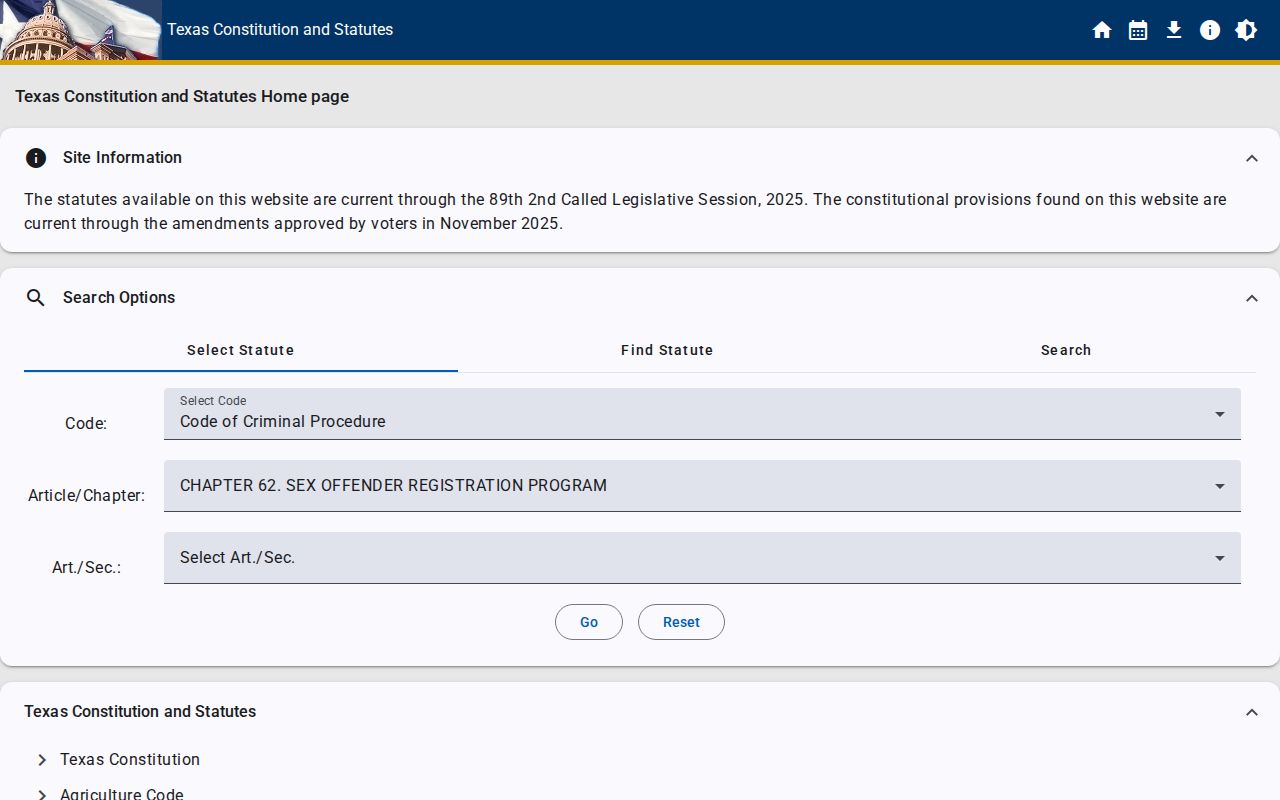
Those statutory limits explain why a Real County registry profile can be detailed yet still omit data held by the sheriff or DPS.
Texas Registration Levels and Requirements
Texas uses risk assessments and offense-based registration rules. Do not convert Level 1, 2, or 3 into federal SORNA tiers. The risk level describes assessed danger and likelihood language. Registration duration follows the reportable offense and applicable release, discharge, or dismissal event, not the level by itself.
| Texas Classification | Meaning | Duration and Verification |
|---|---|---|
| Level 1, low | Low danger and not likely to reoffend under statutory assessment terms. | Offense controls ten-year or lifetime duration; annual verification is the general baseline. |
| Level 2, moderate | Moderate danger and may continue under the assessment terms. | Level does not set duration; offense and history control the term and schedule. |
| Level 3, high | Serious danger and likely to continue under the assessment terms. | Offense controls duration; enhanced community notice applies. |
| Civil commitment | Sexually violent predator or civil-commitment status. | Separate supervision and registration framework applies. |
Adults generally register for life or until the tenth anniversary after the latest applicable release, discharge, or dismissal event. Two or more reportable convictions or adjudications can require verification every 90 days. Transient and civil-commitment rules can be more frequent. Juvenile and adult-transfer rules differ.
Real County Offender Registration Contact
For an address outside a municipality, the county law-enforcement authority is the registration channel. Official sources do not publish a separate Camp Wood or Leakey registration office, schedule, or fee. Call the Real County Sheriff at 830-232-5201 to confirm the right appointment and location. Do not infer hours from an unrelated county office.
Real County Sheriff
P.O. Box 445
Leakey, TX 78873
830-232-5201
Call for registration details
The Real County Sheriff page, the county contact directory, and the official county home page provide the confirmed local routes. Report suspected noncompliance to the registering authority. Call 911 for an emergency.
Note: Registry data can lag, so compare the full Texas profile and confirm urgent concerns through the proper local authority.
Real County Offender Registry Notices
Level 3 community notice has a special local impact in rural Real County. Texas notice can reach residences and businesses within one mile in an unsubdivided area, while the comparison distance is three blocks in a subdivided area. Notices are provided in English and Spanish. The larger rural measure reflects how homes and roads may be spread far apart outside Camp Wood and Leakey.
The Texas DPS registration program overview explains the state and local roles behind those notices.
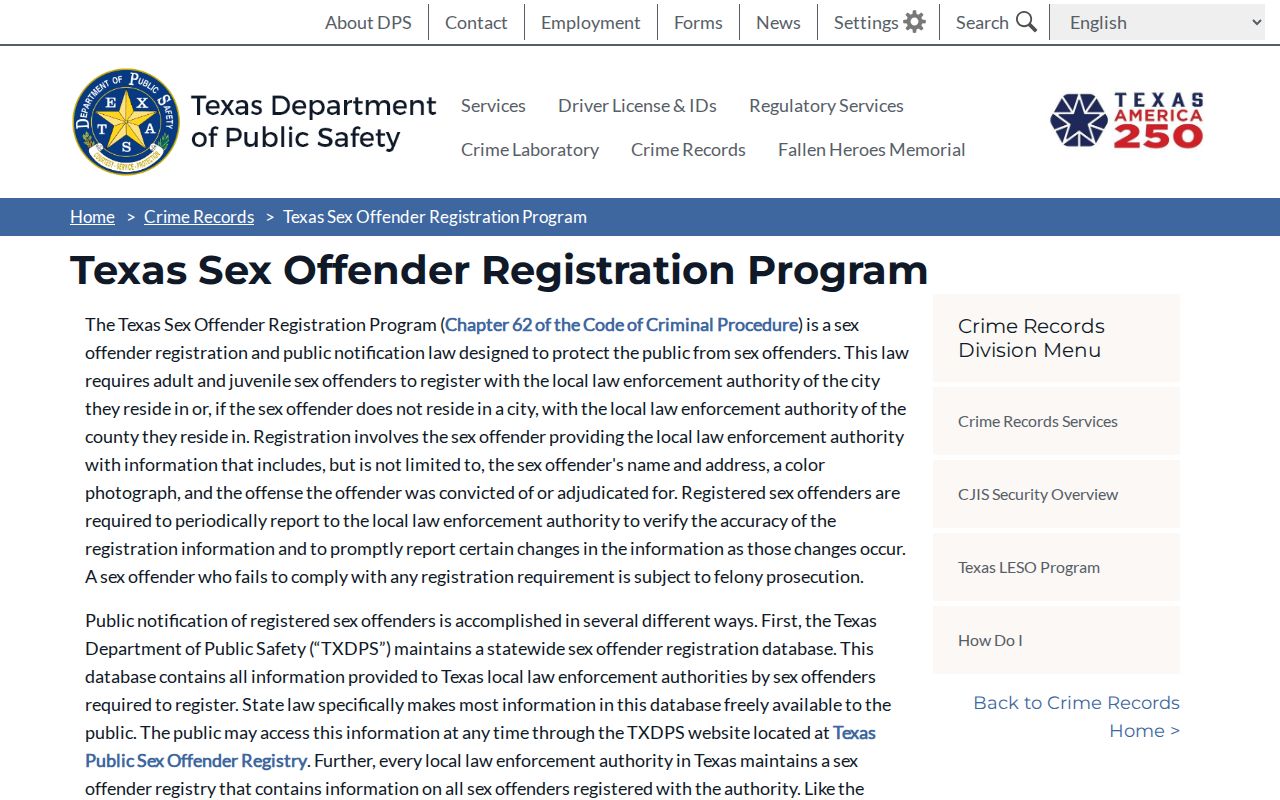
Community notice supplements the searchable profile; it does not replace a countywide query or direct safety response.
Address changes and other required facts generally must be reported promptly under the applicable Chapter 62 articles. Verification is generally annual, but repeat reportable history can shorten the cycle. A displayed date helps readers judge when a profile was last checked, though it should not be treated as real-time surveillance.
Community Notification and Lawful Use
Real County registry access exists for public awareness and safety planning. Use it to understand official registration information, plan age-appropriate family conversations, and know which authority to contact about a genuine concern. Never confront a person based on a map point, a shared name, or an incomplete reading of a profile. Suspected noncompliance belongs with law enforcement.
Misuse is unlawful: Texas DPS warns against using registry information to threaten, intimidate, or harass. Follow the portal conditions and Code of Criminal Procedure Chapter 62.
Vigilantism can harm registrants, families, neighbors, and an investigation. It can also turn a mistaken identity into a serious safety risk. Compare all public identifiers, preserve the source link, and report facts rather than assumptions. When there is immediate danger, call 911 instead of using the registry as a contact tool.